april 2026
// Video Solutions
AI-Powered Video Surveillance Enables Smarter Security Monitoring
Advancements in artificial intelligence for video surveillance are allowing security providers to deliver more accurate threat detection, targeted monitoring and smarter security operations.
By Ed Finkel, SDM Contributing Writer

AI is rapidly transforming video surveillance from a largely reactive tool into a proactive security resource capable of analyzing events in real time. Rasi Bhadramani / iStock / Getty Images Plus via Getty Images
SHARE
Artificial intelligence, or AI, is rapidly transforming video surveillance from a largely reactive tool into a proactive security resource capable of analyzing events in real time. Advances in computer vision, analytics and systems integration are enabling cameras to better identify objects, behaviors and contextual details, while also helping organizations detect incidents faster and respond more effectively. At the same time, security manufacturers and integrators are expanding AI-driven capabilities to give end users greater flexibility and operational insight.
“AI has really changed the game,” says Dean Drako, CEO, Brivo, Bethesda, Md., which merged with Eagle Eye, a company he founded, earlier this year. “Traditional video surveillance, nobody watches any of the cameras more than 0.0001% of the time. They look at cameras when something happens, but there’s no real-time response. Now, with AI, we can watch all of the cameras all of the time … for people falling down, people shooting each other, people littering, people hanging out where they’re not supposed to be. The list goes on.”
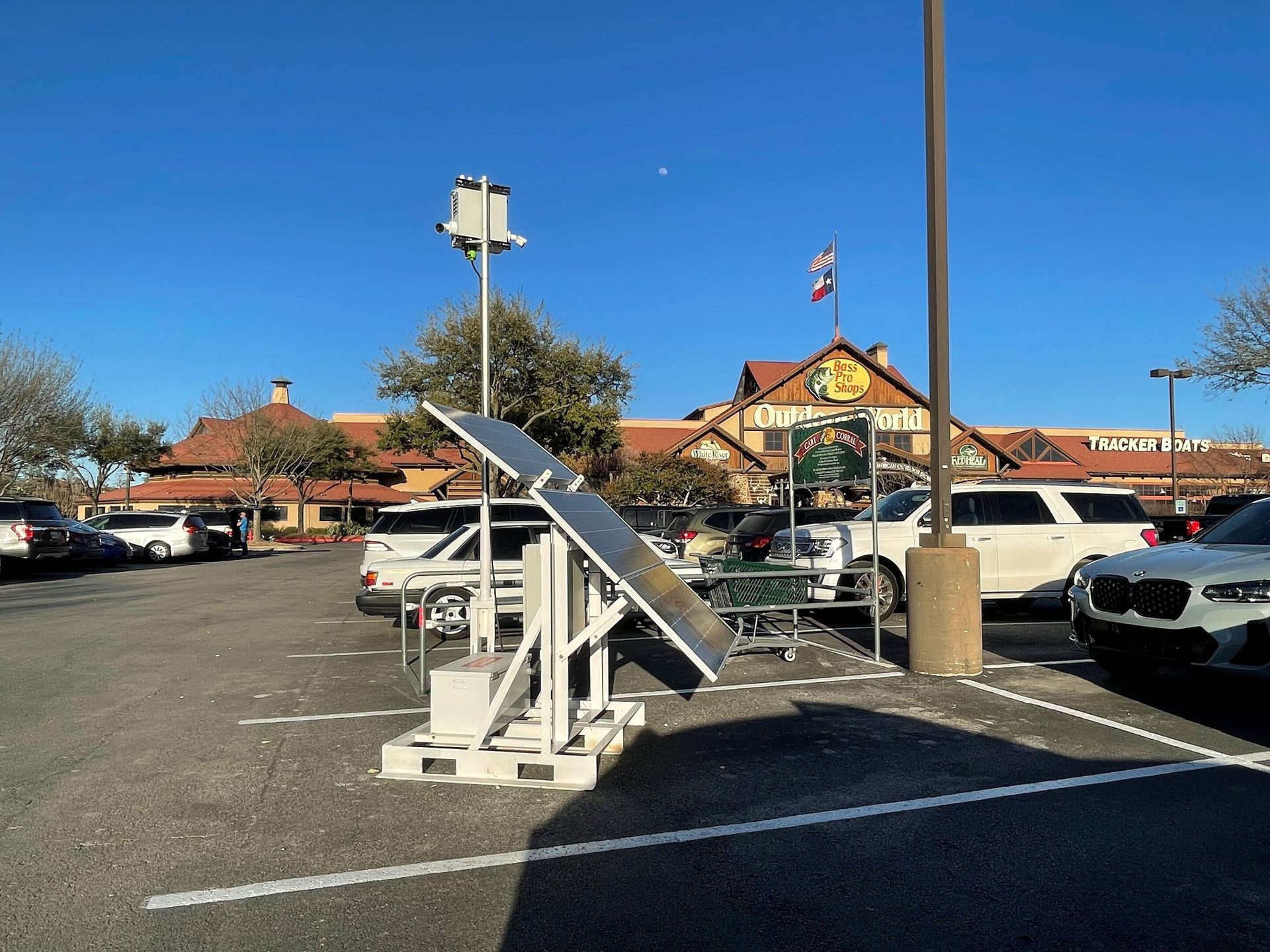
The ability to evaluate incidents using AI allows video solution providers like Pro-Vigil to scale and provide ROI back to the customer. Pictured, a video trailer system monitoring a retail parking lot. Image courtesy of Pro-Vigil
Camera technology has advanced from pixel-based motion detection, which could be helpful but sometimes led to false alerts, to object-based analytics, particularly focused on people and vehicles, says Quang Trinh, business development manager, platform technologies, Axis Communications, Chelmsford, Mass. “What you’ll start to see more is the visualization of objects is now going to be even more granular,” he says. “The next advancements in computer vision will be to add to time-based technology with spatial data.”
If a person or vehicle enters and goes through a scene, the AI will not only provide information on what the object is, but how it’s positioned in a three-dimensional world, enabling the ability to measure height and other characteristics, Trinh says. “That’s where advancements are going — to add more context to the objects it’s describing,” he says. In addition, customers are gaining the ability to define what analytics they want to build, rather than vendors trying to provide analytics out of the box, he adds.
About a decade ago, Speco Technologies patented a deterrent-based automatic identifier that announced, “Warning, you’re under surveillance!” recalls Todd Keller, president and owner of the Amityville, N.Y.-based manufacturer. “That was our entrée into the AI world,” he says. “With advancements in AI, it takes a generic message and somewhat customizes it to specific applications. ... We will go from reactive to a little bit more of the learning side.”
Among the advancements Speco has made are facial and license plate identification, human detection and a “health status check” to ensure that communication products are fully functional — and, if they’re not, the system broadcasts a message, “Houston, we’ve got a problem,” he says. The system also contains a dashboard with other features and benefits, simplifying installation and user interactions. “We’re able to slowly but surely identify issues before they occur, in most cases, or as they occur,” he adds. “And we’re shortening the time of law enforcement response.”
“The quality of data is becoming much better. The business logic can be done at a much higher level.”
— Quang Trinh, Axis Communications
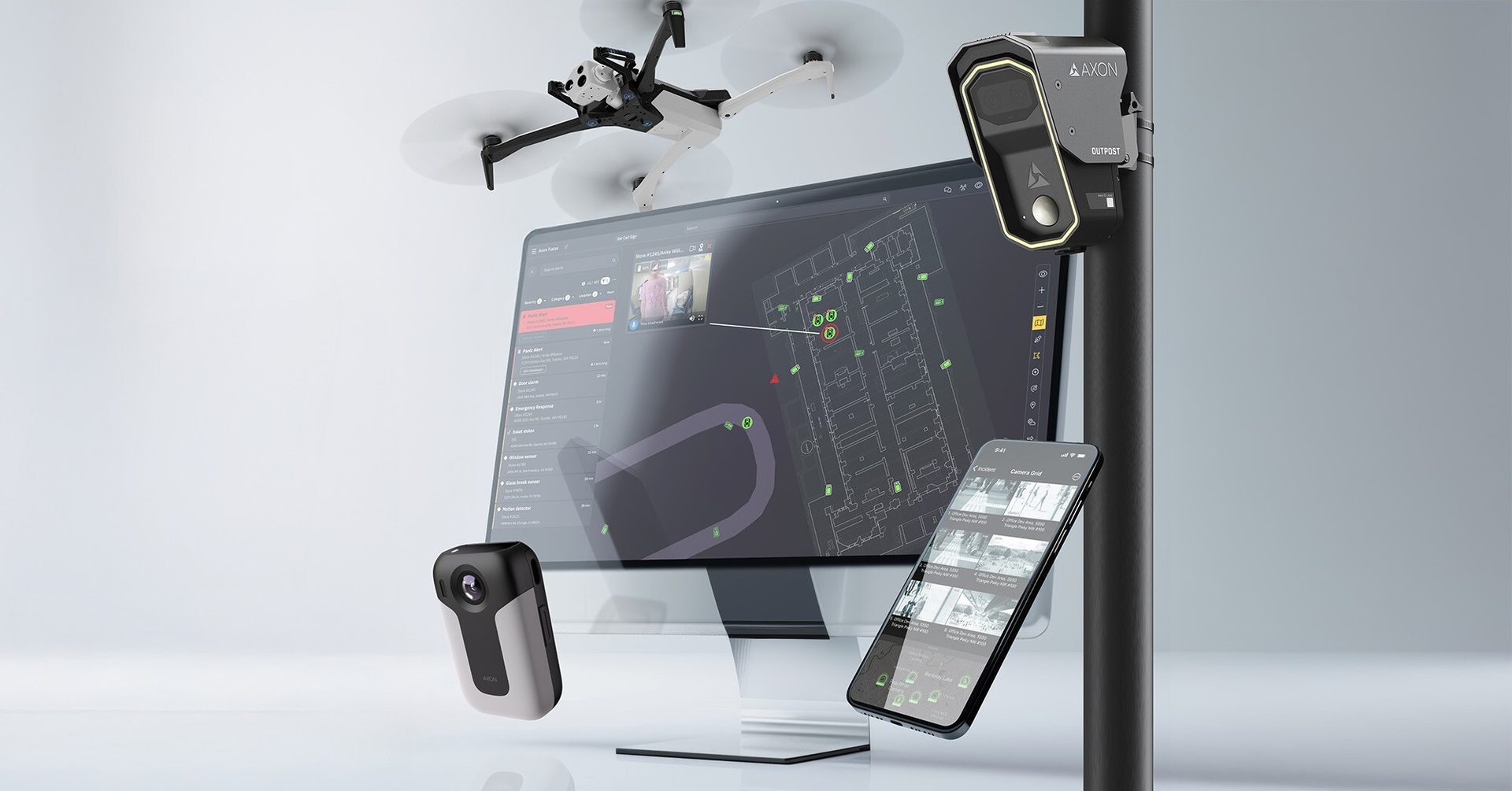
The Axon Fusus system aggregates public and private feeds from any fixed or mobile cameras, along with a camera system called the Axon Body Mini. Image courtesy of Axon
Problematic Use Cases?
While AI-enabled video has plenty of deployment use cases to keep people safe and otherwise assist businesses and residents, are there ways it shouldn’t be deployed? That depends a little on whom you ask.
Axis Communications is not sure how far it will take facial identification or recognition, says Quang Trinh. While the technology is becoming increasingly popular, “Whether we will go deeper will depend on privacy laws,” he says. “That’s becoming more prevalent, in terms of consumer awareness. We’re cognizant of regulations that could impact the use of the technology in the wrong way.”
Companies offering AI-enabled video can’t control whether end users deploy the data collected in an ethical manner, Trinh says. “Dictating what that might look like, that’s very challenging,” he says. “We want to make sure we’re doing due diligence … but it’s hard to determine what people will use it for. We try to put safeguards in our systems and products. These are tough questions for legislators to figure out: what are they going to police?” This is especially true given how rapidly the technology is developing.
Craig Trudgeon at Axon says his company has been concerned about whether facial recognition was sophisticated enough to be used responsibly. “There are always going to be things that shouldn’t be done at that point in time,” he says. “Technology companies have the mandate, at the end of the day, to continue to evaluate that stuff and provide transparent feedback into what is ready, and what is not.” Systems need to be configurable to comply with regulations across a wide array of jurisdictions, he adds.
Aside from illegal uses, which vary across locale and time, it’s hard to define what AI shouldn’t be deployed to do, says Dean Drako of Brivo. “What AI should not be used for is a matter of opinion,” he says. “There’s obviously a darker side, where people could abuse it. … I’m a little worried about it being used to track people. ... But, in general, 99% of the uses will be good for people and society.”
Jeremy White of Pro-Vigil notes that employees are often concerned for their jobs. “[AI] could be framed, ‘Should it be replacing our employees?’ For us, it’s no,” he says. “It’s a force multiplier. It should allow them to do their jobs better and faster. It’s more productivity. If you think AI is going to cut your employee count by half, that’s the wrong direction.”
While facial recognition has created controversy — and led to legislation in places like New York and Illinois — there’s really nothing AI shouldn’t be used for, asserts Todd Keller of Speco Technologies. “I believe in taking advantage of technology and creating an opportunity to stop something before it happens,” he says. “I feel like any advancements in technology always have that [fear], ‘Big Brother is coming.’ But you know what? For those that have nothing to worry about, who cares?”
Axon, Scottsdale, Ariz., which serves customers across verticals like retail, logistics and banking, has rolled out an operational visibility solution called Fusus, which aggregates public and private feeds from any fixed or mobile cameras, along with a camera system called the Axon Body Mini that provides two-way communications, panic alerts and captures transparency in the moment, according to Craig Trudgeon, executive vice president for product.
Fusus brings a holistic view across a company’s network of camera feeds and provides alerts for anything unusual. “The click of a button from a person in the SOC turns on four to eight cameras pointing straight at that incident,” he says. “It allows somebody in the SOC to get eyes on the scene right away.” The Axon Body Mini cameras help to de-escalate an in-person encounter, based on the notion that people act differently when they know they’re being recorded, he adds.
Darron Parker, executive vice president of sales, IDIS Americas, Coppell, Texas, says that the advent of ONVIF Profile M, enabling metadata and event exchange for advanced video analytics, has created an open architecture for integration of AI cameras with third-party platforms, which he says critical as end users increasingly demand hybrid or open ecosystems.
“We need to be proactive around all security needs,” adds Kristen Plitt, vice president of marketing and sales development, IDIS Americas. “How do we operate that AI feature? How does it work? What does this solve for me? … How do we see somebody is intentionally trying to do something [alarming]? How do we pick up that behavior, rather than the object?”
From an integrator’s perspective, Jeremy White, founder and CEO, Pro-Vigil, San Antonio, Texas, sees AI being adopted much more widely among customers. “They see speed to detection, ability to deter potential crime and the scalability of being able to sift through millions of video motions events in seconds, being able to discern which ones are real and act quickly,” he says. “Being able to get to those [incidents] while somebody is still in the camera frame allows video solution providers, especially if they’re doing remote video monitoring, to scale and provide ROI back to the customer, in terms of detection.”
The end user can ask the AI system to find all of the white trucks that drove through a certain area from noon to 1 p.m. the day before, for example, White says. “In seconds, it pulls that,” he adds. “Before, it might have taken a couple hours of manpower. It’s maximizing the efforts of your employees. … AI does all those mundane tasks.”
“The camera is just an eyeball. Analytics make an eyeball smarter.”
— Darren Parker, IDIS Americas
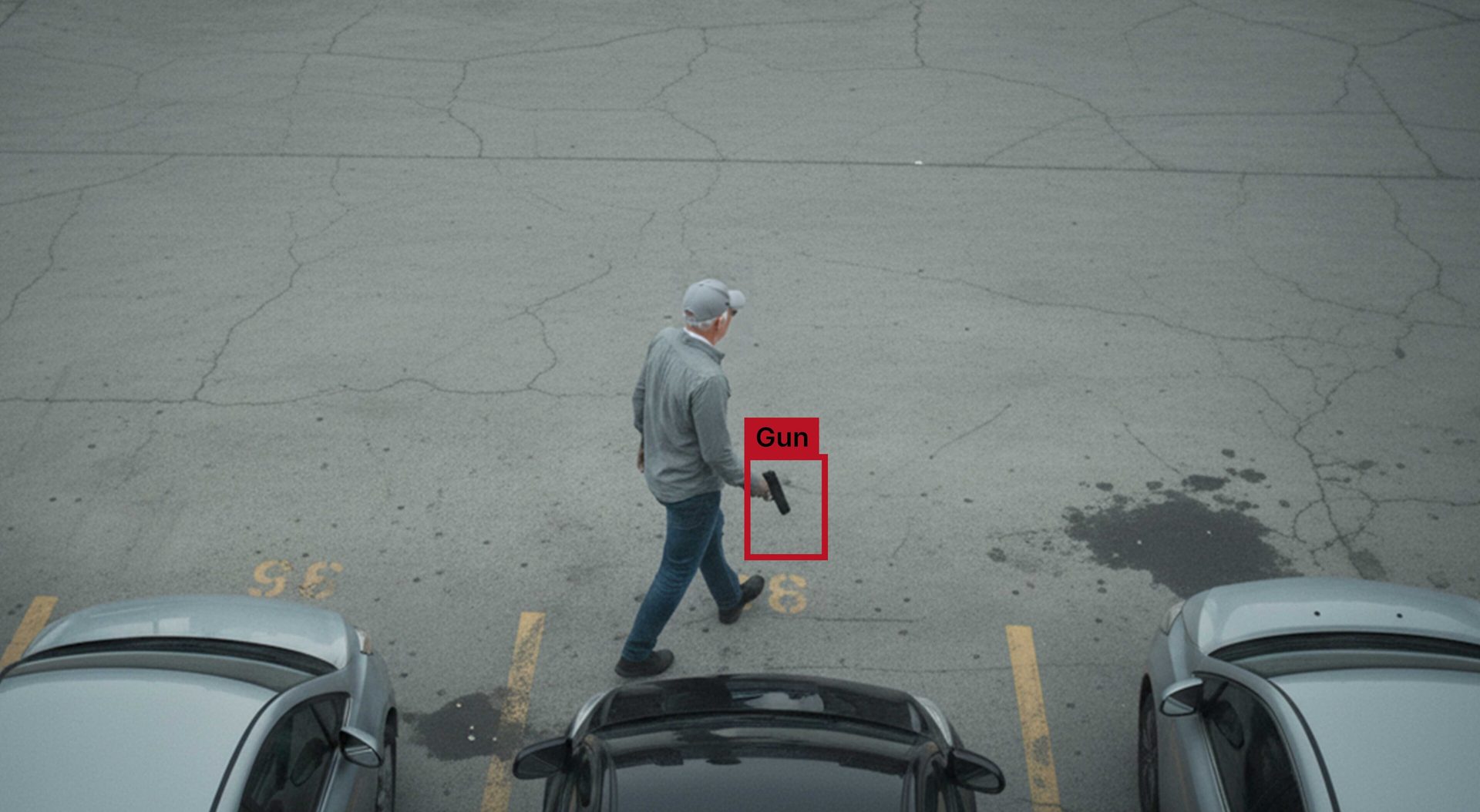
Brivo Eagle Eye Gun Detection transforms existing security cameras from a passive recording device into a proactive gun detection system, a vital tool for prevention and protection. Brivo engineered a triple-layer verification process — two levels of AI and one level of human verification — to deliver the highest possible visual gun detection accuracy. Image courtesy of Brivo
Use Cases
Among the use cases that Drako of Brivo has seen or could see for AI advancements in video surveillance would be gun detection, as well as retail deployment in order to minimize theft. “AI is detecting a person in an area they shouldn’t be. A human will look at it, do a talk down, call the police and yell at them, ‘Hey, dude in the red sweater and black mask, the police have been dispatched. They’re going to arrest you shortly.’ Then they run off before they steal anything. You spoil the crime.”
The technology has evolved to where a single sensor can detect intrusions and aggregate the data to identify the number of people or objects in a scene, says Trinh of Axis. “The quality of data is becoming much better,” he says. “The business logic can be done at a much higher level. We can tie our data with other systems they might have — access control and people badging in, the data of guests and employees.”
AI-enabled video can determine when a person has been loitering in a certain area for too long — for example, next to an ATM, says Keller of Speco, which has created protocols in which the loiterer can be notified that they’re under surveillance.
This is also useful for a person stationed near a side or back door of a school during the day, or in the garage of a hospital at 3 a.m., when nurses might be getting off of their shift, he adds. In the near future, Keller expects “if this, then that” technology that would alert law enforcement immediately if, for example, a gun is detected.
Systems need the ability to predefine when law enforcement should be automatically notified, notes Trudgeon of Axon. “If there’s an active shooter in my store, I want [police] to be able to connect straight away,” he says. “But potentially, if there’s a protest, I don’t want you to log into my system automatically and see things. I want to get notification. The owner of the camera can decide whether they want to give access or not.”
Trudgeon relates an incident in which a truck driver delivering products was surrounded by a group of armed men, and his body camera connected him straight into the command center, which shared the live feed directly with police. “There was a three-way communication happening,” he says. “They told him to stay in the cab [of the truck], and they were sending police directly to him. Ultimately, the people took off.”
While crime prevention is an important part of what’s involved with AI-enabled cameras, Parker of IDIS Americas notes that businesses are also finding value with regard to liability and risk assessment. This includes scenarios like seeing see what actually happened when someone makes a slip-and-fall claim in the employee breakroom, or seeing whether a person hit by a forklift in a warehouse area was walking in a clearly marked restricted area. “The camera is just an eyeball,” he says. “Analytics make an eyeball smarter.”
White of Pro-Vigil also speaks to use cases surrounding generative AI’s ability to analyze a scene to determine whether what the camera’s eyeball is seeing actually constitutes a threat. “You see a crowd starting to gather in a way that’s not normal, in a way that’s not seen before,” he says. “It can analyze video and what’s happening in a scene, and it can give a brief description in words, write out a summary of that snippet or video.”
End users can then search by video, or by object, based on the incident reports, summarizing what happened, what action the operator took and when the police arrived, he adds. “It’s an exciting time,” he says. “We think of video as just a collective of massive amounts of data. I always say, if a picture is worth 1,000 words, what is a high-definition clip of an incident worth?”
AI-enabled video constitutes the “tip of the spear” as an ideal source of data, given that most AI models are built on scraping the internet, Trinh says. “In the security industry, with cameras monitoring the real world, there’s new data every second,” he says. “We’re one of the domains out there that the AI industry is focused on because we generate dynamic content every second of every day from these digital systems.”
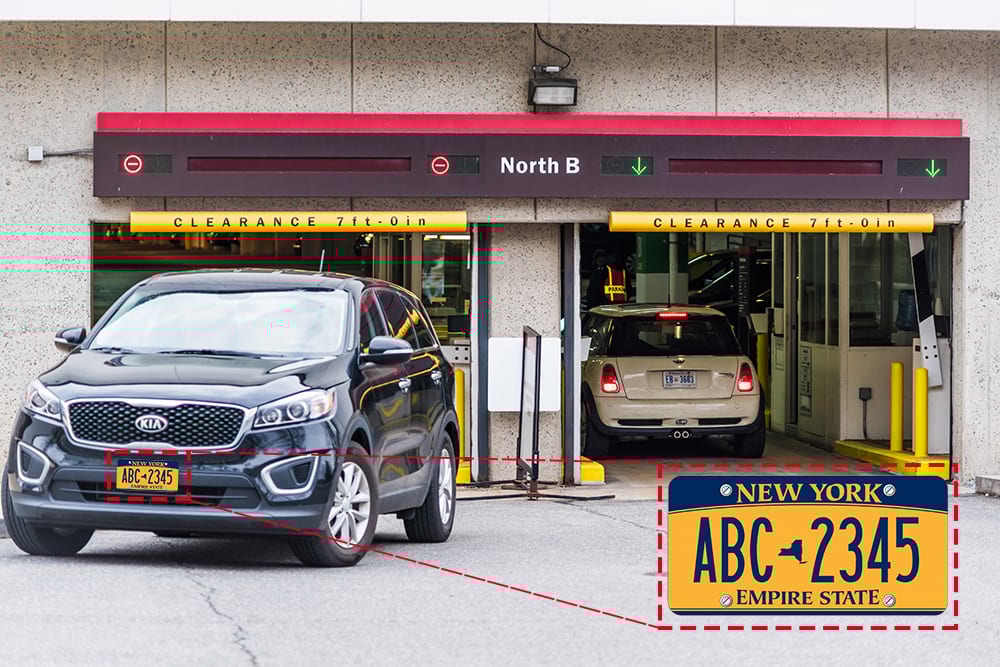
Among the advancements Speco has made are facial and license plate identification (pictured), human detection and a “health status check” to ensure that communication products are fully functional. Image courtesy of Speco
Ideas for Integrators
What do integrators need to know to make sure that they and their customers are getting the most out of AI-enabled video? Several sources shared ideas, with a common theme of the need to develop deeper relationships:
Dean Drako of Brivo had several thoughts. For one, AI and remote video monitoring and integration provides a unified solution that will increase integrators’ opportunities because the system will be watching the cameras constantly, providing higher value to the customer through more sophisticated configuration and deployment. Secondly, integrators need to better understand customers’ problems and how their business operates and not just say, “Great, it will cost this much, here’s your system, bye,” he says. Thirdly, cloud AI is much easier to maintain than edge AI. And lastly, customers going forward will want to buy a single suite that provides a one-stop shop, rather than cobbling together access, video, visitor management and sensors from different vendors.
Darron Parker of IDIS Americas counsels integrators to focus on what keeps their customers up at night beyond the usual questions of where their weak points are most likely to be penetrated. “What does a set of eyeballs potentially help you accomplish? That’s first and foremost,” he says. “You have to ask different questions. You have to get to know your customer in a different way.” Secondly, commit to the training to deploy the technology so it can be used in an effective, secure manner.
Quang Trinh of Axis Communications says integrators need to get transparency from their vendors. “You’re going to see companies popping up left and right. Integrators will be confused. They’re saying they can do this, or they can do that,” he says. “How do you vet them? That’s the challenging aspect.” Over time, the more validated solutions will start to be more collaborative and build trust, as those companies popping up everywhere are “gobbled up by bigger companies with tried-and-true technologies,” he predicts. “You’ll see an expansion, but then you could also see a retraction with mergers and acquisitions.”
Jeremy White of Pro-Vigil says, “[Integrators need to do] strong discovery on the needs of the customer, the needs of that particular location, what their expectations are and what they’re trying to solve.” No single solution solves everybody’s business use case, so the solution needs to be tailored not just to the company but to a particular site, he says. That means integrators must be well-versed in integrating technologies and constantly keeping up with the latest developments in video and AI. “It really is constant education on ... what’s out there and understanding how that may or may not benefit your end users,” he adds.
Craig Trudgeon of Axon counsels integrators to keep in mind that the end goal is typically to accelerate incident response, whether from law enforcement or private security. “There’s going to be an ecosystem of sensors that are going to create alerts,” he says. “Pushing that data so that it can be consumed into a single pane of glass is important. … Integrators being able to harmonize those endpoints is going to be really, really important. And customers aren’t going to replace everything overnight. They’ll want to introduce new sensors and plug them into the old framework.”
Todd Keller of Speco Technologies agrees that integrators need to keep abreast of advancements and real applications, keeping in mind that this technology will help save lives. “That is one of the most important messages, whether it’s me as Speco, or any other production and solutions,” he says. “We all have a responsibility to communicate it effectively. We’ve become so price sensitive. We can’t afford to do that.”
SHARE