april 2026
Integration Spotlight
//
Security Integration
Future-Focused Design: Building Systems With Optionality, Not Predictions
By Zach Brackett
SHARE
In the security industry, the phrase “future-proof” is used often, and usually incorrectly. It suggests that, with enough foresight, a system can be designed to anticipate exactly how technology, threats and operational needs will evolve over time. The future is not predictable. Designing as if it is often creates more limitations than protection.
Future-focused design is not about prediction. It is about optionality. The goal is not to guess which technologies will matter next, but to ensure the system has the flexibility to adapt when requirements change. Optionality acknowledges uncertainty and designs for it, rather than pretending it can be eliminated.
This mindset begins at the infrastructure level. Extra conduit capacity, thoughtful cable pathways and accessible mounting locations rarely make a system more impressive on day one, but they dramatically reduce friction later. These decisions cost far less during design and installation than they do during retrofit, yet they are often the first compromises made when schedules tighten or budgets compress.
Hardware selection plays a similar role. Modular components, standardized form factors and widely-supported interfaces preserve choice over time. When systems are built around rigid, proprietary hardware, customers inherit the limitations of a single vendor’s roadmap. Optionality, by contrast, allows components to evolve independently as needs change.
Software architecture is where future-focused design is most often misunderstood. Open platforms, well-documented APIs and integration-friendly environments do not guarantee better outcomes, but they preserve the ability to pursue them. Closed systems can seem simpler initially. However, they often restrict innovation precisely when organizations are ready to mature their security operations. Frequently, the need of a feature or function is unknown until the need arises.
The future is not predictable. Designing as if it is often creates more limitations than protection.
Scalable network design is another critical element. Bandwidth, storage and compute requirements rarely decrease over time. Designing systems that can expand incrementally without wholesale replacement protects both capital investment and operational continuity. Growth should feel intentional, not disruptive.
True design stewardship is revealed in how choices are explained to the customer. Future-focused designers do not oversell capabilities that are unnecessary today, nor do they dismiss possibilities that may matter tomorrow. Instead, they decide with more future focused information in front of them:
- What is being enabled?
- What is being deferred?
- What constraints remain?
This transparency builds confidence because customers understand not just what they are buying, but what they are preserving.
Optionality also safeguards against organizational change. In today’s industry, security systems often outlast the teams that specified them. Leadership changes, priorities shift and use cases expand. Systems designed with flexibility accommodate these transitions without forcing complete redesign. They age more gracefully because they were never locked into a single moment’s assumptions.
To state clearly, a future-focused design does not necessarily require overbuilding. It means building deliberately. Not every system requires maximum scalability or unlimited integration potential. The discipline lies in identifying which choices preserve meaningful flexibility and which simply add cost. Optionality is not excess; it’s intentional capacity.
A well-executed and future-focused design keeps delivering value after installation. It lowers technical debt and speeds up responses to new needs. It allows the customer to retain control as their environment changes as the system supports growth instead of limiting it.
In an industry defined by change, the most responsible designs are not those that attempt to predict the future. They are the ones that respect it. By prioritizing optionality over prediction, we create systems that remain relevant. They do so not because the future was guessed correctly, but because the customer was given room to choose it.
SHARE
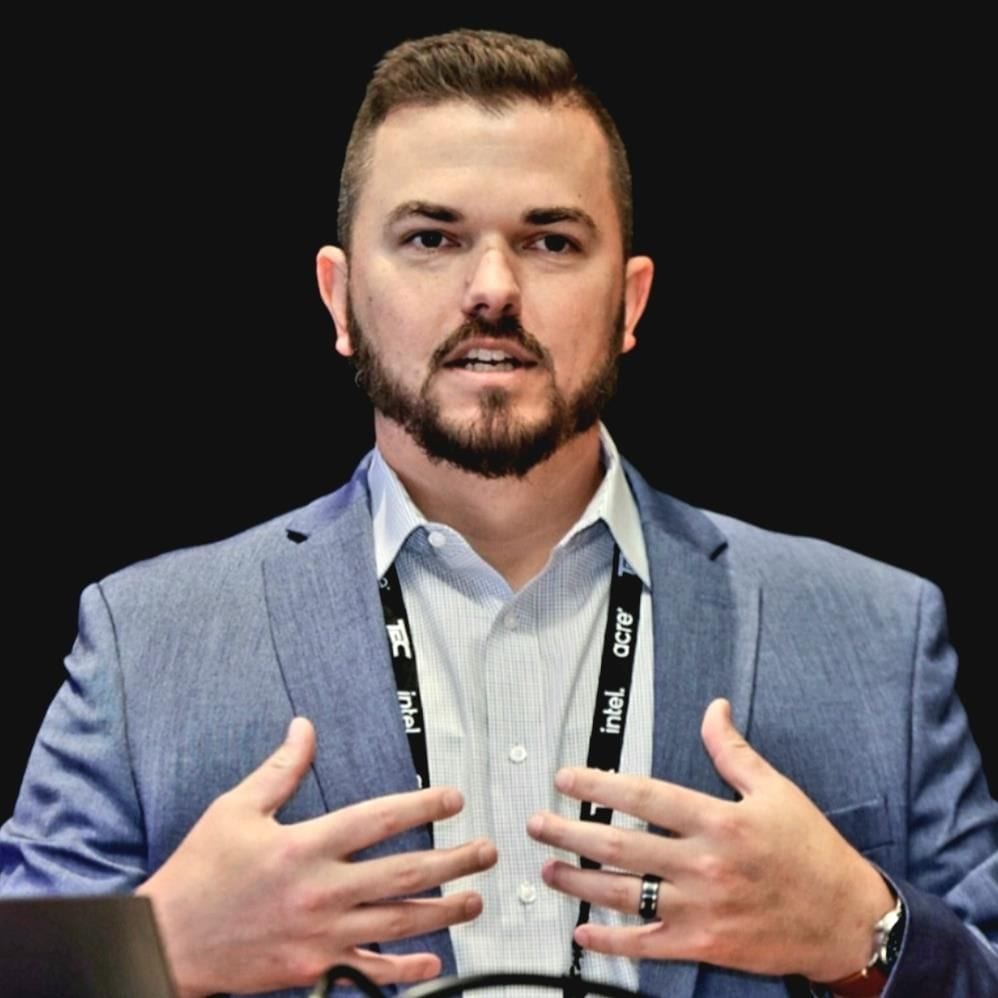
Zach Brackett is a sales and design professional with Preferred Technologies Inc., a PSA owner and SDM’s 2023 Systems Integrator of the Year. With early exposure to the security industry through a survivalist father and a locksmith uncle, his passion for protecting people began early. Now, with nearly 15 years of professional experience in the security industry, Brackett has developed a deep understanding of security operations and solutions. He is driven not only by the challenge and creativity of the work, but also by a commitment to continuous professional growth for himself and those around him. Bio image courtesy of PSA