december 2025
// Video Solutions
Video Surveillance & The New Perimeter: Smart, Scalable, Seamlessly Connected
Perimeter security is evolving beyond fences and gates, and video surveillance is at the heart of this transformation. Industry leaders explore how AI, cloud and other evolving technologies are redefining the perimeter and presenting opportunities for unified solutions.
By Brianna Wilson, SDM Managing Editor
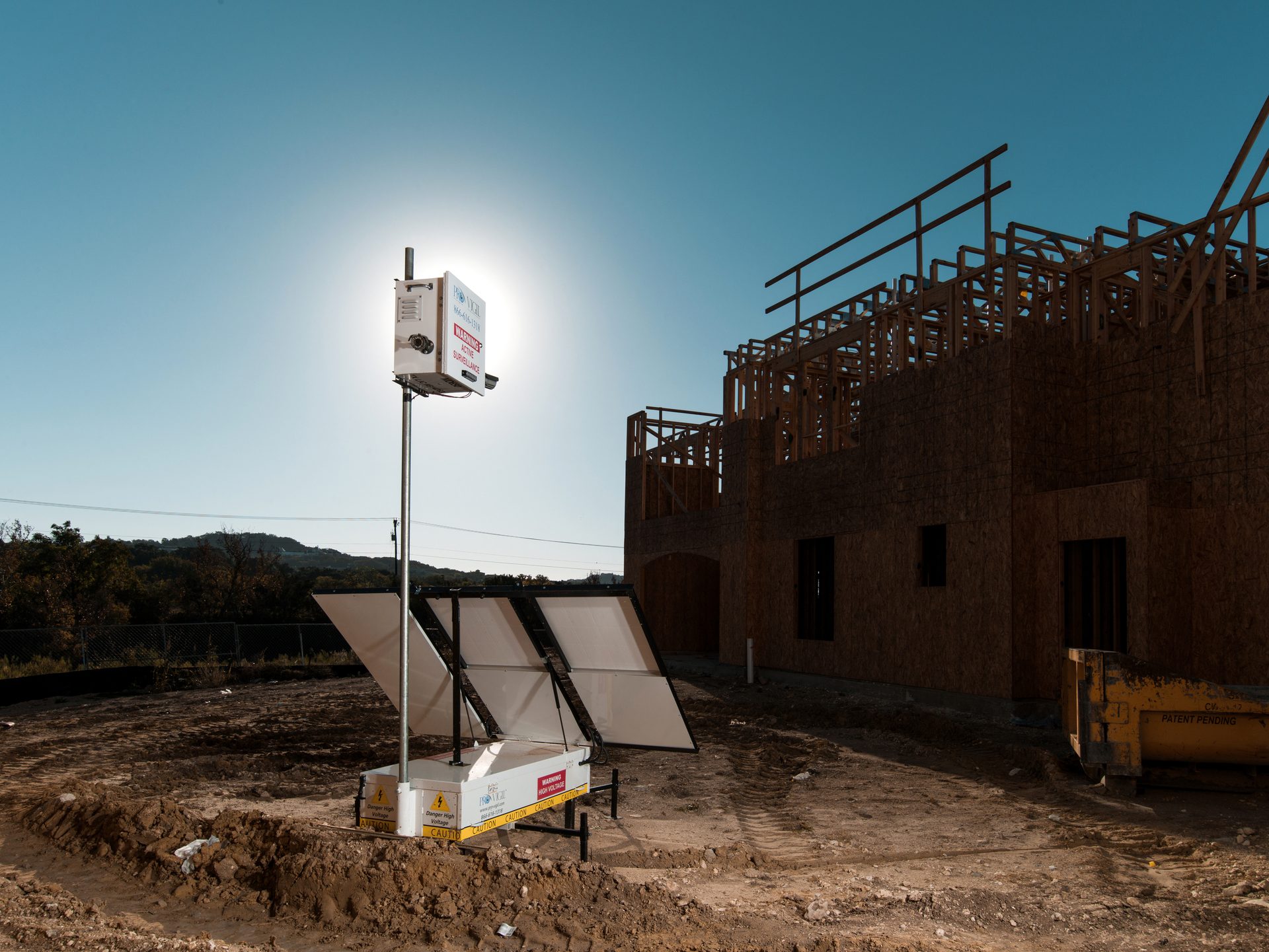
With advancements in video surveillance technology, the perimeter security market is at a pivotal point. Image courtesy of Pro-Vigil
SHARE
Perimeter security is often defined as the first line of defense end users can use to protect their property, people, and profits. Video solutions provide clear-cut evidence of what happened at the scene of a crime or disturbance. The convergence of these solutions presents a world of opportunities: end users gain the peace-of-mind that their business will be proactively and properly protected; and security dealers and integrators can position themselves as true business partners with a wide range of security solutions.
Today’s Perimeter Security
The definition of “perimeter security” is fluid. In its simplest terms, Hans Kahler, chief operating officer, Eagle Eye Networks, Austin, Texas, says perimeter security is an outdoor activity, sometimes combined with fences or other physical barriers. “Oftentimes where video is involved is where a physical barrier is impractical,” he says. He provides examples like car lots, construction sites, stadiums, campuses, etc., where there may be a mix of physical barriers and technology.
“A corporate campus in a suburban office park may not have a hard wall or even a fence, compared to a more urban area where there is usually a structured perimeter,” says Aaron Saks, director of sales enablement, Hanwha Vision America, Teaneck, N.J. “Some manufacturing facilities are also often located in remote areas that may not have a hard fence, or large areas like an airport or a shipping terminal may employ a combination of chain link fences, walls or spots where there is no physical perimeter at all.”
Professionals spanning multiple verticals and company types agree: perimeter security has evolved far beyond its traditional definition.
“In today’s environment, [perimeter security] is no longer about fences and gates,” says Andrew LaMadrid, vice president of sales, Allied Universal United Command Center Solutions, Irvine, Calif. “Using cameras, using some AI software, really layering on the pieces with the communications — all [of this] comes together to create a more secure perimeter.”
Allied Universal provides temporary perimeter security solutions for events. “The key is every event has a different profile,” says Ty Richmond, president, event services, Allied Universal. “The perimeter is defined based on the event profile and the needs and requirements of the event and the risk associated with that.”
Scott Elliott, chief revenue and marketing officer, Hirsch, Santa Ana, Calif., agrees that today’s perimeter security is inherently multifaceted. “Perimeter security today is an edge-to-core ecosystem that deters, delays, detects, verifies and responds to threats in real time with reliable, unified solutions,” he says. “Video surveillance is critical for detection and verification, not just deterrence. A camera alone doesn’t stop a breach — it’s the integration of visible technology, response systems and trained personnel that creates trust without compromise.”
Jeremy White, founder, Pro-Vigil, San Antonio, Texas, also thinks of perimeter security as part of a layer of a broader solution. “Layering in video allows you to enforce this ‘drawn line’ [the perimeter], and then use video as the earliest detection point, and a very accurate one versus a motion sensor,” he says.
“We’re in an area where physical security, primarily video surveillance, has evolved from a passive ‘watcher’ tool to a proactive platform. Video analytics play a key role in this shift, enabling teams to mitigate risk and gain actionable insights that support holistic facility operations,” says Greg Parker, vice president, life cycle solutions, Americas, Johnson Controls, Milwaukee, Wis.
“Today’s systems are really just integrating analytics and remote access to keep things proactive,” says Michael Poe, director, product management, 3xLOGIC Video and Business Intelligence, Fishers, Ind. “You can have real-time monitoring, you can have your intrusion detection, and then, if something does happen and you weren’t able to respond to it, you have that ability to go back forensically and look at what would have happened, what could have happened.”
With the vast amount of applications, client demands and available technology, choosing a solution can be challenging, but it presents opportunities for integrators to become subject matter experts, communicate with their clients and position themselves as true business partners.
“Perimeter security today is an edge-to-core ecosystem that deters, delays, detects, verifies and responds to threats in real time with reliable, unified solutions.”
— Scott Elliott, Hirsch
Core Technologies & Use Cases
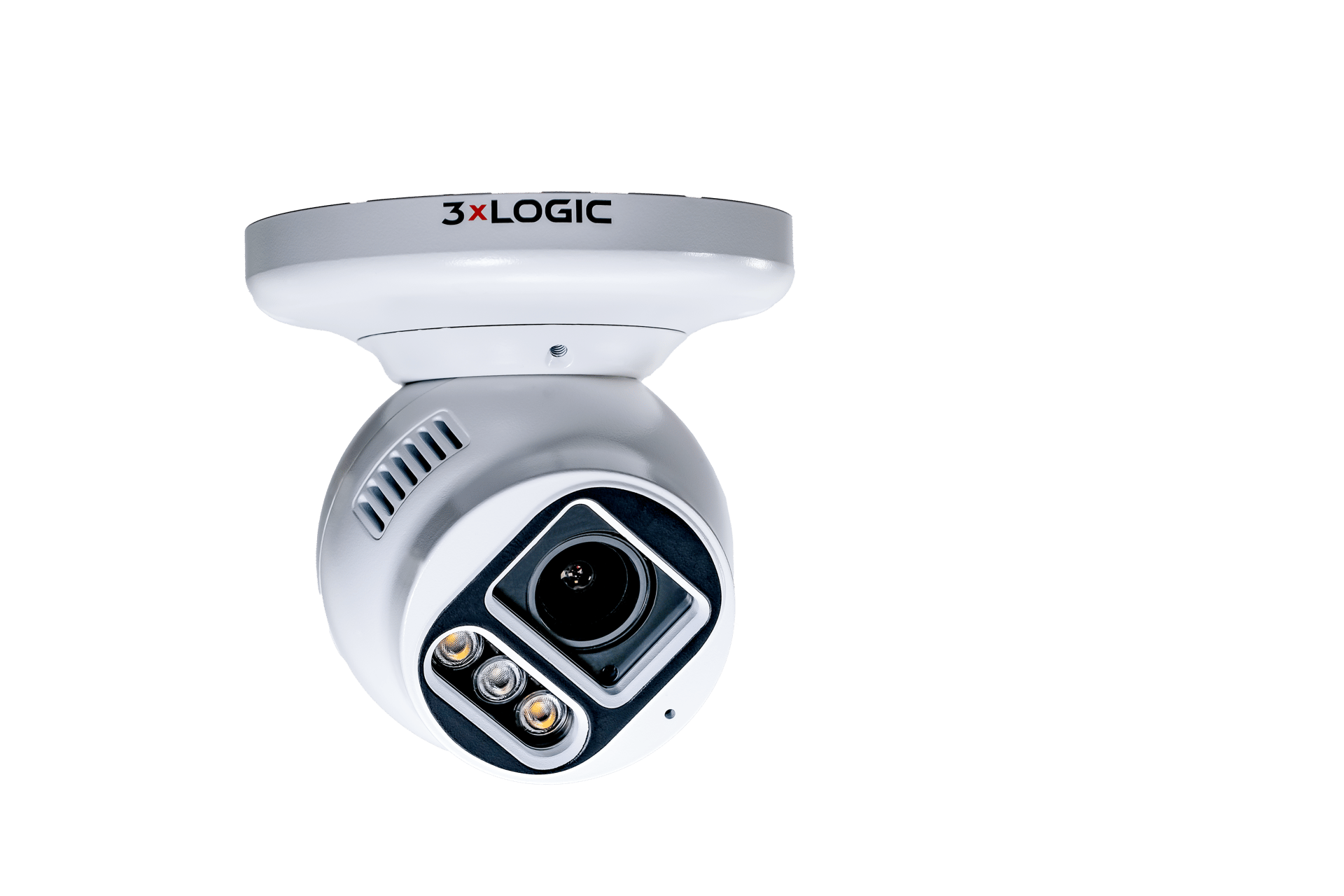
Cameras are the basis of video surveillance for perimeter security. Image courtesy of 3xLOGIC
The core technologies involved in video surveillance solutions for perimeter security needs range from simple, cost-effective zoom cameras to military-grade radar technology. Additionally, multiple factors influence investment in perimeter security and which types of technology should be deployed to meet client needs, ranging from market, application, location, size, and budget and resources, says Hanwha Vision’s Aaron Saks. “Any perimeter surveillance technology needs to integrate seamlessly with security operations centers located either in buildings or elsewhere on property grounds,” he says.
Understanding the various technologies, their individual capabilities and how they work together is imperative for building meaningful packages and solutions for end users.
Cameras
Cameras are a given, though they can pose challenges when it comes to deployment. Because it can be difficult to obtain the necessary infrastructure for cameras in some locations, Eagle Eye created a solution dubbed ‘Eagle Eye Anywhere’ — cameras that can be deployed, as the name suggests, anywhere. “You can hang [them] on a pole, a post, a wall, a tree. In some cases, we’ve done this and have the solar panel capture power to run the camera and have the cellular modem transmit the video,” says Hans Kahler of Eagle Eye.
Multi-sensor cameras are playing a larger role in the market. Saks says this is due, in particular, to their ability to be mounted in areas where a team needs to cover one large area. “The multi-sensor camera’s ability to look left and right as well as straight down is useful along a perimeter, as well as the flexibility to choose from multi-view, 180-degree view, 270-degrees or 360-view to ensure there are no blind spots in your security monitoring,” he says.
Pan-tilt-zooms, or PTZs, are an effective choice because of their ability to move, zoom, and capture imagery further than a fixed camera. “We have some PTZs that might not be able to identify an object some miles away, but they’d be able to maybe see buses or large vehicles from a mile or multiple miles away, depending on the clarity, the lighting, and all those sorts of factors,” says Steve Burdet of Axis Communications.
Bispectral technology is also on the rise, such as fusing a thermal camera and an optical camera. “As an operator, you don’t see a difference, but you might be able to detect an object via the thermal, but display it on your optical,” Burdet says. “There’s been a big push towards that, which has subsequently helped drive down the cost, making these more attainable for customers who are not just high security military bases, or big government spendings.”
Thermal
Thermal technology can “see” in all different types of weather, lighting, etc., and can go to a much further range than an average camera. “[Thermal imaging] is ideal for laying down a nice virtual perimeter,” says Jeremy White of Pro-Vigil. “It lacks in great detail but gives you enough because you’re looking at, depending on what version you use, a dark site and a white blob moving around, but you can see what’s going on.”
Because thermal technology uses heat, not light, it’s much easier to detect an object distinguished against the ground or another backdrop, which makes them great for looking down fence lines, Burdet says.
This is an increasingly affordable option for widespread perimeter deployment, Saks says. “With thermal, or, in the case of bi-spectrum cameras where you have a thermal and visible sensor, a security team can accurately see what’s happening along a perimeter regardless of lighting or other challenging conditions, which is extremely beneficial for facilities with large perimeter areas to cover,” he says. “This ensures an intruder cannot breach the perimeter unseen.”
Panoramic
Panoramic technology can be helpful in cases where a 180-degree or a 90-degree field of view is ideal. “If you put them back-to-back, you’ve got a 360-degree field of view,” Burdet says. “If I’m on a building, I want to look at everything around this area on this building. You put one on each wall, you’ve probably covered the entirety of that building, depending on your density for it.”
Burdet points to the increase of panoramic devices as a significant shift in the perimeter security market over the past few years. “There were some [pre-pandemic], but the struggle was processing on the edge to compute,” he says.
Radar
Radar technology is less common, often deployed in airports, boats, and/or military facilities. “You might want a radar to complement your panoramic, your thermals, your video surveillance,” Burdet says. “The reason being is that, where optics might fail — for example, if it’s really, really foggy — a camera is probably not going to see through the fog, and a thermal might not see through the fog because that fog or moisture is a temperature that’s blocking the temperature of the other object from getting through. Radar doesn’t have that problem.”
Because this technology is more expensive, it’s not generally ideal for everyday users. “Maybe if I have an oil rig facility out in the middle of nowhere that’s often attacked or I have issues with it, [radar] is worth the cost because I can weigh as an ROI against the damage, shutdown, etc.,” Burdet says. “But for other areas where they’re just trying to have more accurate perimeter protection against break-ins, thieves, things like that, it’s a bit hard to justify what could be hundreds of thousands of dollars for deployment.”
Creating the Ideal Solution
While there is no one-size-fits-all solution, Saks believes an ideal solution can be created by complementing on-site guards and/or security personnel. Speaking to trends, he is seeing more organizations deploy “active” perimeter protection, whether that be a camera positioned to focus on a fence or the use of laser trip wires. He also says that developers are integrating “channelized” fencing into new perimeter builds, adding active fence line protection after construction is complete.
Jeff Ogborn, special programs manager, Hirsch, says the ultimate starting point is clarity. “Define your goal: deter, detect or respond in real time. Conduct a layered assessment of the environment, compliance needs and operations. Design systems where physical, electronic and procedural layers work together,” he says. He adds that it’s important not to underestimate the human element of technology. He advises, “Prioritize brilliantly simple tools that empower people, not just technology.”
Becoming a Business Partner
There is no end-all be-all when it comes to deploying video surveillance solutions for a client’s perimeter security needs. “Several factors can help determine the best video surveillance solution … including occupancy levels, staffing availability and budget,” Parker says. He lays out the following steps for integrators to build the best solution: clearly identify the perimeter; determine which sensors are needed for successful detection and where they should be installed; and leverage flexible, scalable solutions that allow for easy addition or removal of components based on current needs.
Steve Burdet, manager, solutions management, Axis Communications, Chelmsford, Mass., adds, “There is the potential for integrators to be able to either work with their customers, to upsell them towards more complex solutions and/or demonstrate why it’s a worthy investment to begin with. If integrators aren’t thinking in that way today, they should start to do the learning they need to get there.”
Accomplishing this means putting the customer first and focusing on more than just their upfront needs. LaMadrid says it’s important to build a client profile first and foremost. “Focus on the client’s risk profile and environment, not on the hardware itself,” he says. “Once you understand what their objective is, whether it’s more safety, security, if it’s more operational, it’s … developing the plan based around the event, not necessarily forcing your solution to the event.”
White says, “The other thing is really understanding the landscape, understanding the task at hand for that particular project. [Say] we’re on perimeter [and] we have a lot of challenges. Have we identified those? Are we deploying the right equipment? Are we doing it the right way? Do we have the right amount of bandwidth? All these things are critical. Otherwise, you’re setting yourself up for failure. One bad experience and bad taste in the mouth, it doesn’t just hurt your company, it hurts the rest of the industry.”
Kahler warns against the ‘pattern’ he often sees integrators fall into. “They find a technology, they become comfortable with it and they tend to stick with that for a while because they know it and they trust it,” he says. “I understand that, because they’re putting their own reputation on the line when they sell or recommend a solution to a customer. There’s a balance that they need to strike. … My advice to the systems integrators, to the resellers, is try the technology, see how it goes, ask the questions. And if it doesn’t work the way you want, talk to the supplier. … There are ways to make it work, but it only works if we try it out and we try to make it work.”
Richmond agrees. “So many integrators, so many customers spend a tremendous amount of money installing and having a third-party integrator installing technology. But where there is a significant breakdown, I think, is in the training and the familiarization and the capability of the people that are responsible for managing the outputs of that technology,” he says. “You can have all the technology you want, but if all the fingers on the hand are not coordinating, functioning and understand the overall goal and objective and how to accomplish that, you have serious deficiencies.”
An open platform is yet another important layer of technological advancement that integrators need to be thinking about. “A big thing these days is talking about the data that those analytics are now providing to you,” Poe says. “You can get people counting data, you can get dwell time data, really multi-purposing your video system in order for your customers to get the most value out of it. And then integration across platforms — you’ve got video, you’ve got access control, anything that might come down the road that we don’t know about right now. But having an open system [helps] folks to understand that what they’re investing in today doesn’t stop with just what they’re purchasing today; it’s open for other types of technologies going forward. Really build those kinds of long-term partnerships, make the product sticky to the customer and then understand that it’s not just ending with that first transaction, but it’s something that continues as a partnership.”
Kahler agrees: an open platform is of utmost importance. “You want to have a solid system that can do all the base needs that you have across all your cameras, can easily do most of the functionality you need, but can also be extensible for if you have niche needs that the main system does,” he says.
For integrators who might be just starting with perimeter security, Brian Lohse, general manager, commercial business unit, Alarm.com, Tysons, Va., suggests taking small steps first. “Build a simple, scenario-based package, and earn some success selling that before expanding into the never-ending world of potential scenarios. Make it more tangible,” he says.
“So many integrators, so many customers spend a tremendous amount of money installing and having a third-party integrator installing technology. But where there is a significant breakdown, I think, is in the training and the familiarization and the capability of the people that are responsible for managing the outputs of that technology.”
— Ty Richmond, Allied Universal
AI’s Role in Perimeter Security
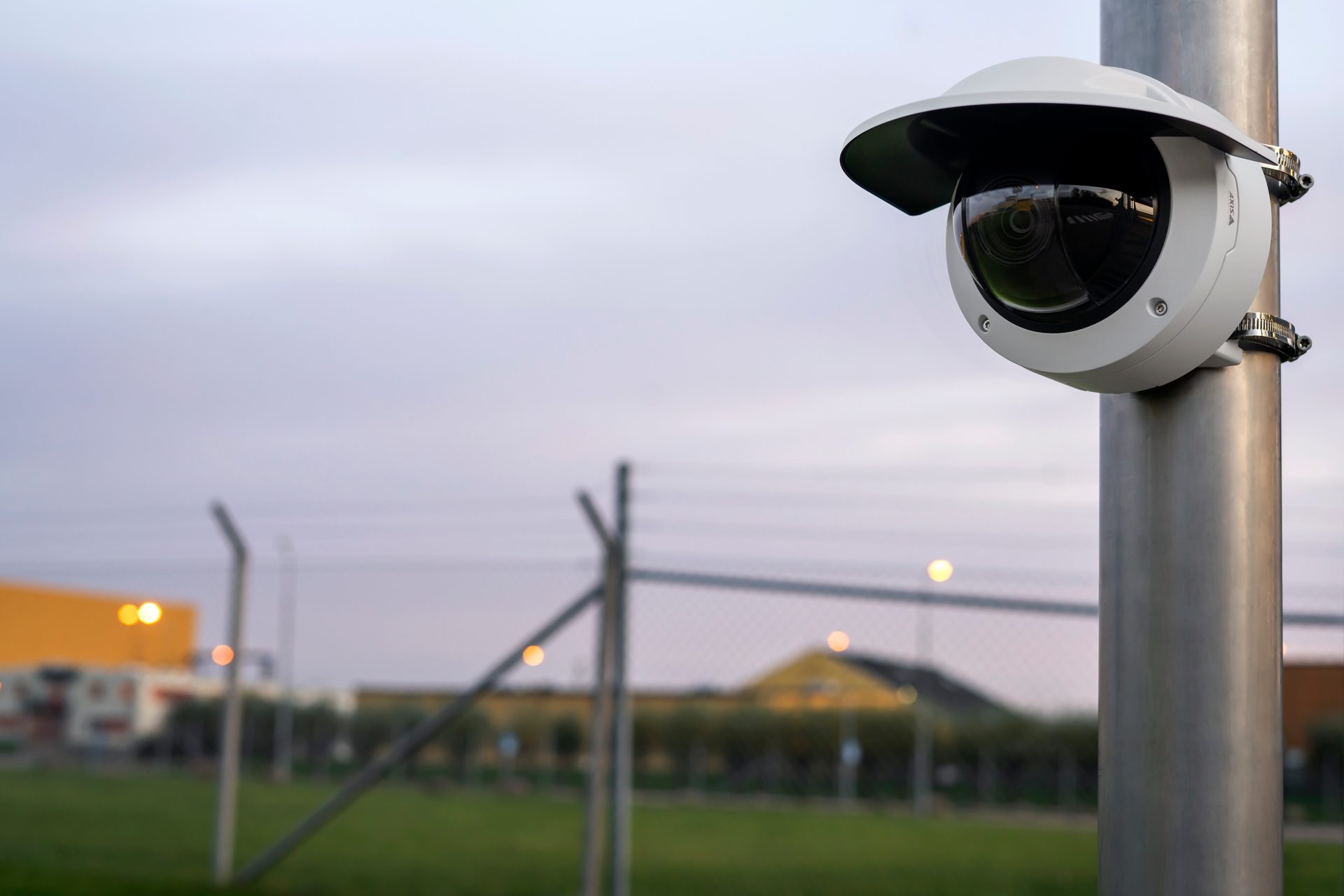
Artificial intelligence is playing a key role in video surveillance solutions, enhancing capabilities that make perimeter security better than ever. Image courtesy of Axis Communications
AI has been a hot topic for a couple of years now. Steve Burdet of Axis Communications traces the shift back to 2019. “That’s where, within this industry, we started to see the first [examples]. They weren’t deep learning, so real AI, but they were machine learning, which was AI trained, and very simplistic algorithms. We went from being able to detect motion … to then start to distinguish objects we care about, like people or vehicles,” he says. “That has subsequently accelerated very quickly to types of classifications of vehicles, the clothing types people wear and/or directions or zones. … It’s not really complex, but how it has helped, first and foremost, is that the number of nuisance alarms that we’ve had are substantially reduced.”
Michael Poe of 3xLOGIC Video and Business Intelligence agrees. “If you’re analyzing video in real time … then you’re really able to determine genuine events, genuine threats versus maybe environmental noise, leaves blowing, animals, etc. [with the help of AI],” he says. “You’re really able to focus in on what the issue is and then drive them away. You can give automatic alerts, you can do a forensic search afterwards, use predictive analytics, etc., and that all helps to reduce false alarms and improves response times for, say, a security operations center.”
Adding a layer of AI-powered advanced analytics allows humans to focus primarily on responding to potential threats before they escalate, thus enhancing the proactivity of security intervention. “AI-enabled viewing can also reduce the number of false positive threat reports, saving both time and resources,” says George Parker of Johnson Controls. “Agentic AI … can act autonomously with minimal oversight while keeping humans in the loop when judgment is critical. Combining AI-driven incident management with human expertise enables organizations to transform their security response systems into strategic operations that inform broader business decisions.”
Aaron Saks of Hanwha Vision America adds, “New applications for AI include targeted object and person detection to reduce false positives caused by environmental motion. This leads to event prioritization by analyzing video streams and highlighting only relevant incidents; and bandwidth optimization by reducing the need to stream or store all footage continuously. AI is also useful in cameras with license plate recognition technology, recording vehicle entries and exits, and alerting staff to potentially dangerous activities in real time. Individuals can be identified by their license plates while they’re still outside a perimeter … and security teams can intercept them before they enter the facility.”
AI also addresses a prominent challenge for security companies: scalability. “You’ll reach a point where just throwing more manpower at it and more dollars at it doesn’t financially make sense,” says Jeremy White of Pro-Vigil. “You still run into errors. AI is huge in that sense. Quickly being able to identify that actual event that they’re looking for, being able to provide that to the business owners, managers, and those who are running the business, is another key attribute that AI has. … Our job is to get them that video they asked for, so doing it in a timely manner, knowing that request probably has some urgency or there’s some meaning behind it, is key.”
Some clients have unique needs that extend beyond traditional perimeter security use cases, and AI can come in handy to build equally unique solutions. Hans Kahler of Eagle Eye provides two examples that have yet to come to fruition, but that he is confident AI will play a role in. A shipping company expressed concerns about employees taking packages and throwing them over the perimeter. Thus, the company is looking for AI video solutions to detect small objects that would be more difficult for the human eye to see. In another case, an Australian company is looking for solutions specifically to detect koala bears. “This real estate developer wants to build [something], but they have to prove that there’s no koala bears on the property before they can build,” Kahler says. “This is not something we’re actively doing; we’re in development, trying to see how practical it is. But it’s the same exact setup as perimeter protection. You put cameras up around an area. Now, you’re not looking for a human trying to break in, you’re looking for a koala bear.”
In the areas of deterrence and detection, AI is adapting to identify and respond to environmental patterns. “[With] AI deterrence, the camera is capturing a picture of the person, determining the color of their clothing and elements around them in the scene, then providing an automated audio talk-down response,” Brian Lohse of Alarm.com says. If someone is wearing a yellow shirt and standing next to a truck, for example, the AI will process that detail and trigger a verbal response, like, “You, in the yellow shirt, standing next to that truck, you’re trespassing, and we’ve called the police.”
On the opposite end, an AI system can begin to recognize employees, in a business setting. “If the car of the CEO of the company [pulls into the lot], when the monitoring center receives the alert, [the AI model] is saying, ‘I think this is so and so who’s allowed to be there.’ That extra context just makes … it easier to avoid false alarms,” Lohse says. “I think we’ll continue to see additional layers of AI at the service of filtering out the very small percentage of incidents that are true security breaches, and hopefully very seamlessly dismissing all of the non-breaches in a non-painful way.”
Even post-event analysis is seeing improvements with the use of AI metadata to conduct searches rather than combing through hours of video. “By balancing AI as a decision-support tool with human oversight, we deliver security that is sophisticated by design,” Jeff Ogborn of Hirsch says. “Predictive, intent-based solutions are the future.”
Burdet concludes, “AI has helped us better parse information that was always there, we just really struggled to extrapolate from.”
How Perimeter Security Is Evolving
As security budgets evolve into structured, lifecycle-based investments and demand for consumer-grade experiences continues to grow, Parker believes video surveillance solutions will increasingly adopt new features, i.e. intuitive dashboards, real-time alerts, self-service ticket creation and lifecycle tracking to better align with demands and enhance both adoption and customer satisfaction. “As lifecycle management becomes an increasingly important part of perimeter security, interoperability between different devices within a security system will enable newer technologies that deliver a consumer-grade experience to be more easily integrated,” Parker says.
Burdet doesn’t believe a ‘perimeter solution’ will exist in the future. “It is a more comprehensive solution. That ‘perimeter solution’ can do so much more,” he says. He predicts more technological advancements in how these solutions communicate with AI. “It might be: ‘Hey, tell me what happened to my perimeter,’ or, ‘When something occurs, I want you to do these actions and take care of it.’ And [it will be possible to] speak to a chat bot like they’re a 24/7 guard.”
Lohse agrees, “The perimeter itself will dramatically expand.” He anticipates a rise in drone technology, which can respond to security events in real time, and in mobile trailer units.
“Perimeter security today is basically niche as a high-end technology that only a small subset of commercial properties can afford,” Lohse continues. “We’re at the very early innings of what I would call the democratization of remote video. I think it’s going to go from this sort of expensive, difficult technology to what’s going to be the standard of any protected property, whether it’s a home or a small business where, previously, it maybe wasn’t practical.”
White has observed a shift in what end users want. “They don’t want to know about equipment. They don’t ask what brand of cameras, what models you’re using. They want peace of mind,” he says, adding that clients are more frequently requesting blended solutions. “Customers are looking through the options and [exploring] how to put together a real business plan.”
In the same vein, Kahler says, “People don’t want AI. What they want is the data delivered to them when they want it.” He believes the cloud, in addition to AI and easily deployable cameras, is going to lead customer demand because it allows for data to be delivered exactly when clients want it.
Continuing with client demands, LaMadrid says they are asking for more mobility and flexibility. “They want systems that can be spun up very quickly and moved and scaled like never before,” he says. “Even smaller events want more visibility than ever before. There’s a strong preference for bringing in software that’s able to scale with the rest of the camera package.”
On the technology front, Elliott says the industry is heading toward autonomous and distributed intelligence; AI-enabled devices will make first-line decisions at the edge, with human oversight built in. “Multi-sensor fusion — thermal, radar, LiDAR, video — will reduce false alarms,” he says. “Cybersecurity and auditable actions will define trust without compromise as systems grow connected.”
Conclusion
Perimeter security is no longer defined by walls and fences; it’s an adaptive, technology-driven ecosystem that’s continuously evolving as part of a unified solution. As end users demand more proactive and flexible protection, integrators have an opportunity to move beyond installation and become trusted business partners who deliver long-term value. The future of perimeter security lies in interoperability and intelligent solutions that make protection not just possible, but predictive.
SHARE