october 2025
// Access Control & Identification
Locks & Door Hardware: Balancing Form, Function & Compliance
Manufacturers weigh in on the importance of ease of installation, aesthetics, and the impact of changing codes.
By Christopher Crumley, SDM Contributing Writer
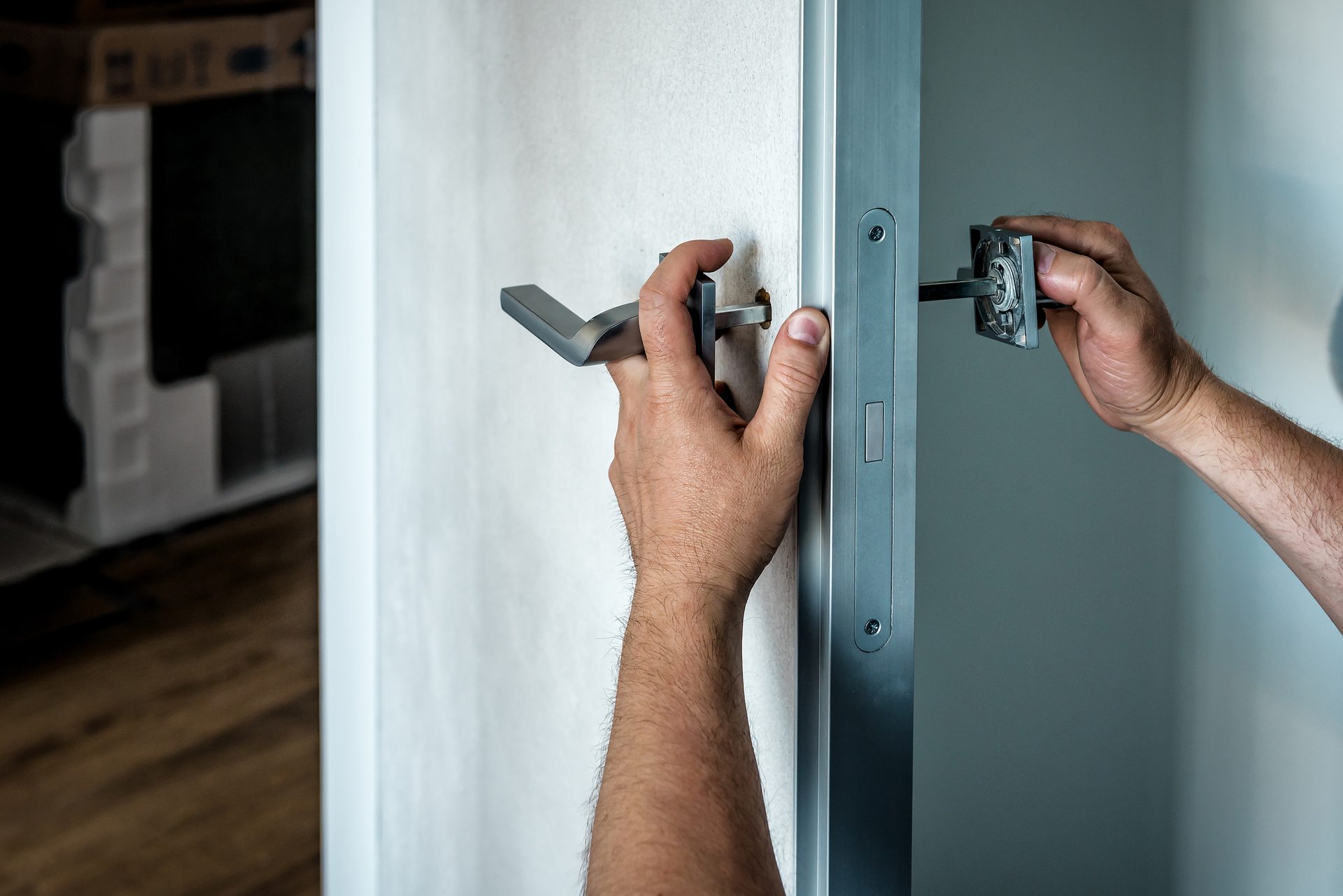
Ease of installation is a top concern of manufacturers in the locks and door hardware market. vovashevchuk / iStock / Getty Images Plus / Via GettyImages
SHARE
Smart lock and Wi-Fi enabled, interconnected systems may dominate security headlines, but mechanical locks and door hardware are still the backbone of entry security. While more stable and solidified than the innovative edge of the industry, locks and hardware are still being shaped by market demands, building codes, and shifting customer expectations.
Ahead, manufacturers dive into finding success through the combination of innovation, reliability, and efficiency.
Ease of Installation
One of two main trends driving the design of locks and door hardware is making products simpler to install, while understanding installers’ pain points around the labor shortage.
“Customers are increasingly focusing on pricing pressures, product value, and enhancing the overall user experience,” says Michael Brislin, director of product management for mechanical locks and key systems, Allegion, Carmel, Ind. “At the same time, there’s a growing need to address the shrinking knowledge base in skilled labor markets, which impacts product installation and support. Specifically, customers are seeking hardware that is easier to install, offers additional value-added features, and incorporates contemporary design elements that cater to a variety of market and architectural needs. These trends are driving product evolution to meet both current demands and future market expectations.”
Ross Nevdahl, senior product manager, ASSA ABLOY, New Haven, Conn., elaborates on those trends: “Hardware changes move more slowly than software, but that makes it even more important to respond thoughtfully. The biggest trend I’m hearing from locksmiths and integrators is the growing challenge of ‘de-skilling’ — newer team members are less mechanically inclined. And with constant pressure on costs, training investments are harder to justify, especially for a single product.
“So, we find ourselves in a balancing act: we don’t want to make changes so big they require re-education, but we also don’t want to stagnate,” Nevdahl continues. “That’s why we focus on making our products easier to install without drastically changing their physical profiles. On the hardware side, failure is not an option — it just has to work. Software gets some grace for hiccups or bugs. Hardware doesn’t. And as integrators (who now make up a growing portion of our customer base) sell full-system packages, they highlight the software features. Our hardware needs to support that value without introducing friction.”
Specific to their product, Nevdahl says, “Staying true to our principle of not requiring retraining, we made sure the new 9800 monitoring version matches the installation profile of the rest of the 9000 Series. The wire exit locations are the same, the mounting templates are the same — it’s all consistent. So, for someone who’s installed the 9400, 9500, 9600, or 9700 before, it’s the exact same process: drill four holes, bolt it in, and go. That ease of installation is something we’re proud to preserve, even as we expand functionality.”
Ray Krispin, director of sales, Marks USA, a division of NAPCO, Amityville, N.Y., says, “We are always looking at our user experience from ease of installation with minimal door preparation to easy user interface on our software. Marks USA has always designed our hardware with the installer in mind. We strive to create a quality lock set that is easy to install and is backed with a lifetime mechanical warranty.”
Rick Estes, associate vice president of business development, dormakaba North America, Indianapolis, adds, “We’ve prioritized integrator-friendly features across the board to reduce installation time and minimize errors. This includes easier templating for faster mechanical installs (such as with our 9000 Series).”
“Customers are increasingly focusing on pricing pressures, product value, and enhancing the overall user experience. At the same time, there’s a growing need to address the shrinking knowledge base in skilled labor markets, which impacts product installation and support.”
— Michael Brislin, Allegion
Importance of Aesthetics
The other major trend is the aesthetics of the locks and door hardware.
“Aesthetic expectations are changing,” says Lester LaPierre, director of business development for electronic access control, ASSA ABLOY Opening Solutions – Americas, New Haven, Conn. “Designers and end users are pushing for sleek, minimalist hardware that blends seamlessly with modern architecture. In both residential and commercial applications, hardware should be visually unobtrusive while offering robust security.”
LaPierre continues, “In many projects, the appearance of hardware is just as important as its function. Our Novel Mortise lock, popular in off-campus housing, integrates the reader directly into the lever — eliminating bulky add-ons and delivering a sleek, minimalist look. We’re also seeing high demand for modern finishes, such as black suede powder coats, which we’ve incorporated across a wide range of products, including hinges, levers, push bars, and more. When installed on dark frames, these components virtually disappear, providing a clean, architectural finish that aligns with contemporary design expectations. … On the durability and safety front, we continue to enhance our solutions for high-security and environmental resilience. That includes hardware rated for windstorm and hurricane compliance, thermal performance improvements with added gasketing and insulation, and even ballistic-rated openings for government, petrochemical, or other high-risk environments.”
Aesthetics are important for Allegion’s newest offering as well, Brislin says. “Allegion is in the final stages of launching our new Performance Series Commercial Locks from Schlage, which include mortise, cylindrical, and tubular product offerings,” he says. “The Performance Series is specifically designed for non-institutional markets, with a strong focus on competitive pricing and application-specific needs. These products feature design-forward levers tailored to key verticals such as office spaces, retail, hospitality, and outpatient medical facilities — markets that are sometimes underserved today.”
Estes adds, “Aesthetics and user experience are influencing hardware decisions. Slimmer designs are in demand, particularly in hospitality and corporate spaces. Finishes like matte black and satin brass are popular with architects and designers. We’re also noticing an emphasis on hygiene and touchless interactions. In healthcare and education settings especially, demand has increased for antimicrobial coatings, wave-to-open sensors, and electrified levers.”
Nevdahl stresses the importance of meeting those aesthetic expectations: “Visual appeal matters. When integrators install modern, software-driven systems, the hardware should look equally modern. If you pair a sleek setup with a clunky silver box on the frame, it undercuts the whole presentation. That’s why we offer all our finishes across all products — the hardware should never detract from the system's value.”
“In many projects, the appearance of hardware is just as important as its function.”
— Lester LaPierre, ASSA ABLOY Opening Solutions – Americas
Changing Codes
Often, code changes happen slowly and deliberately. Changes can be anticipated and prepared for, and do not come as a surprise. But changes do come.
“While industry standards and building codes for commercial mechanical door hardware aren’t changing drastically year over year, we are seeing an evolution to align with market trends and environmental factors,” Brislin says. “For example, we continue to enhance our products to support windstorm and threat-level protection for K–12 environments. Additionally, we’re focusing on how our legacy premium products can exceed performance expectations, such as meeting acoustical standards, while delivering a quiet, secure, and aesthetically pleasing solution for a wide range of markets.”
Estes says, “Building codes and safety requirements are ever changing, and we’re helping our customers stay ahead. Current updates center on ADA accessibility, life safety standards, and hurricane or extreme weather resilience. … I’m seeing an increased focus on lockdown protocols, five-pound exit devices, and hurricane requirements — all while maintaining the architectural designs that end users expect. At the same time, the convergence of cyber and physical security standards is prompting customers to ask how our hardware supports zero-trust models and dual-authentication protocols.”
LaPierre adds, “Evolving building codes and security standards continue to shape how we engineer our hardware solutions, leading us to innovate for compliance, accessibility, and aesthetics without compromising functionality. We have successfully developed solutions that comply with strict state-specific and federal standards, ensuring effortless access while maintaining ADA and building code requirements.
“For example, our solutions offer programmable and flexible systems to support complex entry scenarios without compromising ease of use or compliance,” LaPierre continues. “For instance, in a vestibule setting, if a credential triggers door one to unlock and open, it’s followed by a timed delay before door two unlocks and opens, providing a smooth ingress for individuals with mobility challenges.”
Market Adoption
Locks are an essential part of any building, but the manufacturers indicated that some of their products were seeing increased adoption in specific markets. The growth is happening mostly in the multifamily and K–12 markets.
“Our mortise indicators are being used in single-stall restrooms in hospitals, and are currently used in K–12 schools for classroom doors and single-user restrooms,” Krispin says. “MVP cloud software is being used in multiple applications, from office applications and multi-housing projects.”
Estes has a very similar experience in adoption: “Hospitality and multifamily are the big two. Quantum Pixel+ is seeing strong adoption with design-conscious properties looking to enhance their guest experience.”
The school market is big for one of Allegion’s recent products, Brislin says. “The Schlage Indication Trims, launched in 2024, have seen overwhelming adoption, particularly in the K–12 market. These trims provide clear visual indicators of door status (locked or unlocked), offering peace of mind to teachers, students, and administrators while elevating security protocols.”
New Product Showcase
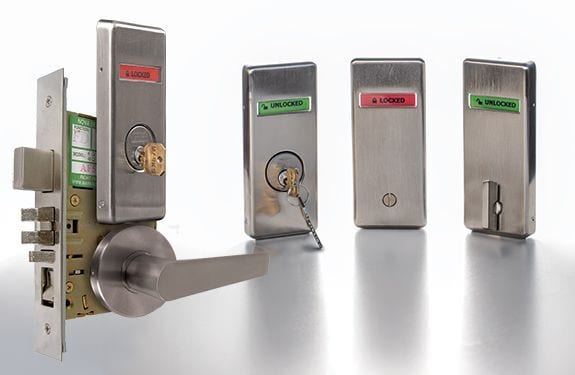
Marks USA Mortise Lock Indicators
Built with ADA-friendly, code-compliant designs and backed by Marks’ trusted reputation for quality and a lifetime warranty, these locks are ideal for classrooms, patient rooms, offices, lounges, and other high-use environments where security clarity matters most. Cylindrical lock indicators built on the Marks 195 grade one cylindrical lock will be out later in 2026. Image courtesy of NAPCO
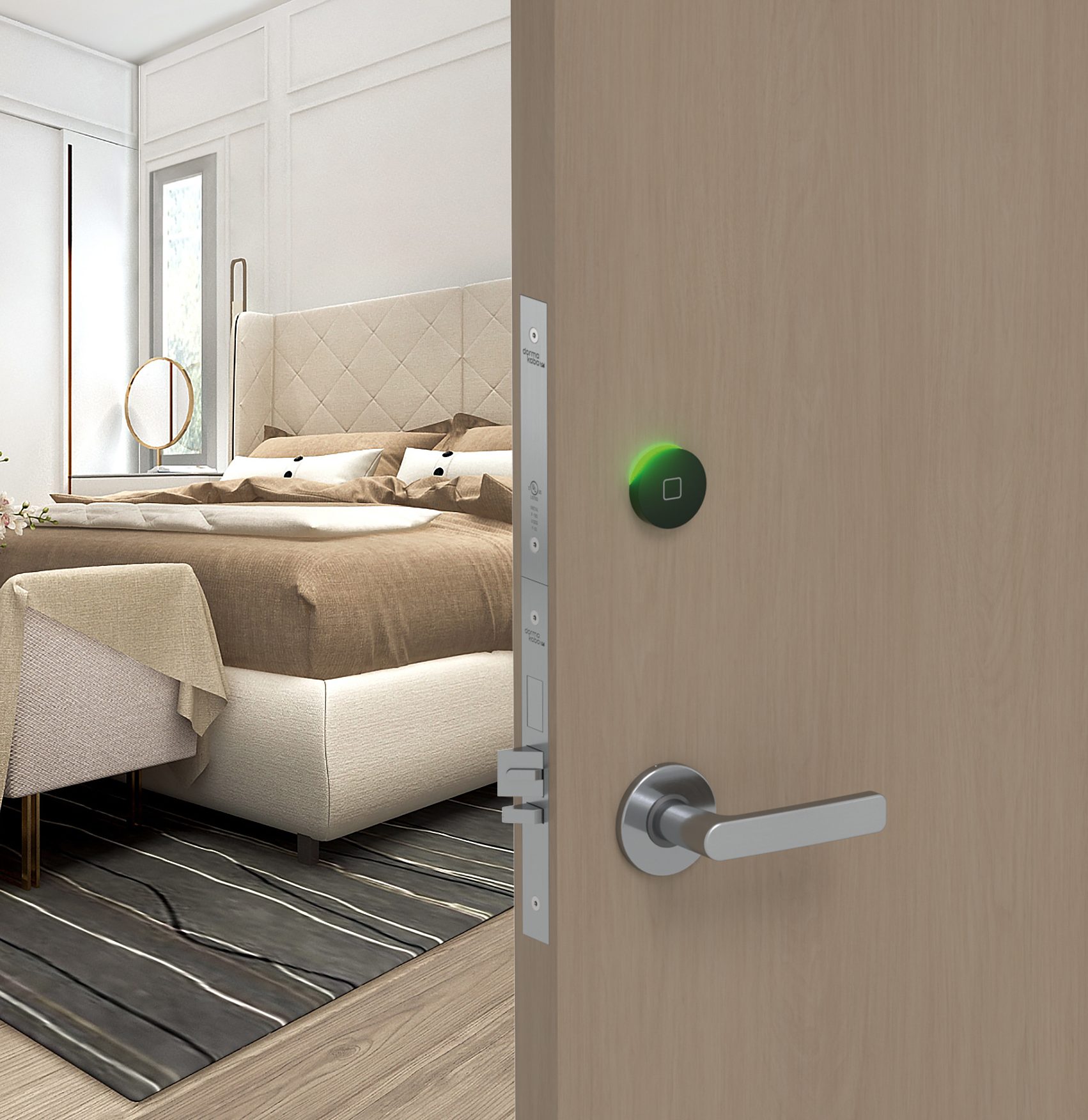
Quantum Pixel+ Hotel Lock
The Quantum Pixel+ is dormakaba’s latest hotel electronic locking solution. It features a sleek, minimalist design and is an easy-to-use, secure, and flexible solution that is both visually sleek and high performing. The entry hardware is hidden in the body of the door and, when paired with NFC technology, instantly turns a phone into a key. Image courtesy of dormakaba
HES Electric Strikes
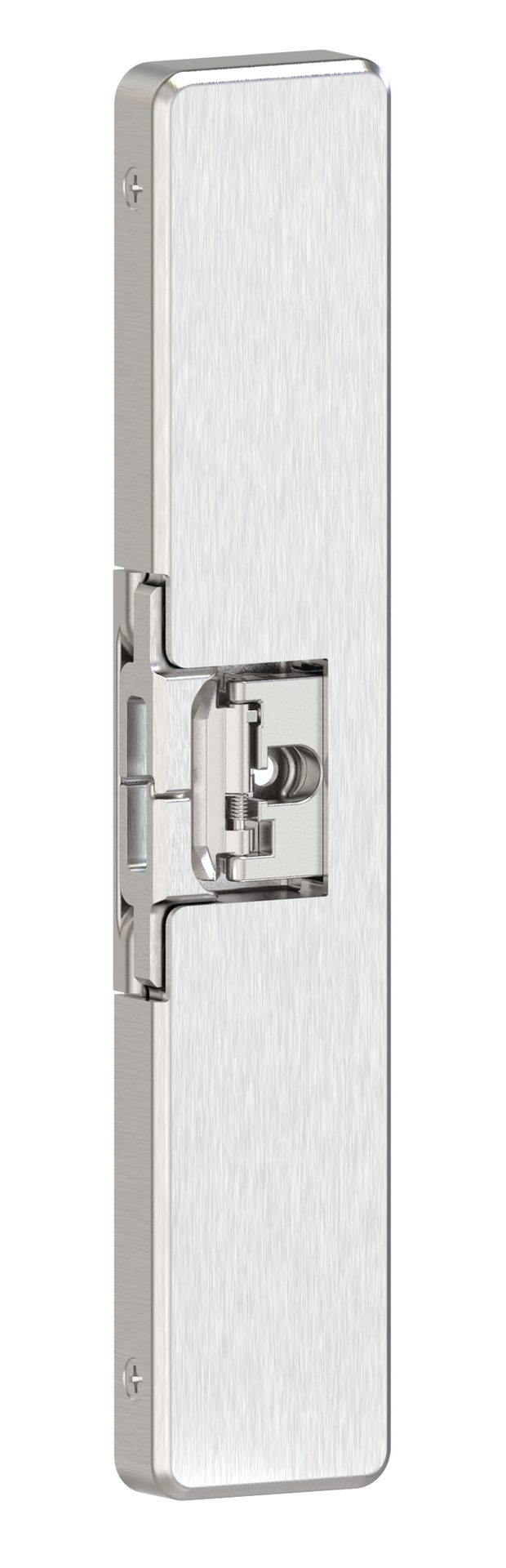
HES from ASSA ABLOY has introduced new monitoring capabilities to its 9800 Series of high-security, surface-mounted electric strikes with the addition of LBM (latchbolt monitoring) and LBSM (latchbolt and strike monitoring) options. This latest addition brings new, premium capabilities to the product series, including the ability to monitor latch, strike, and door position and provide real-time status notifications. Security personnel receive instant notifications on unauthorized access attempts or product malfunctions to maintain uptime proactively. Image courtesy of ASSA ABLOY
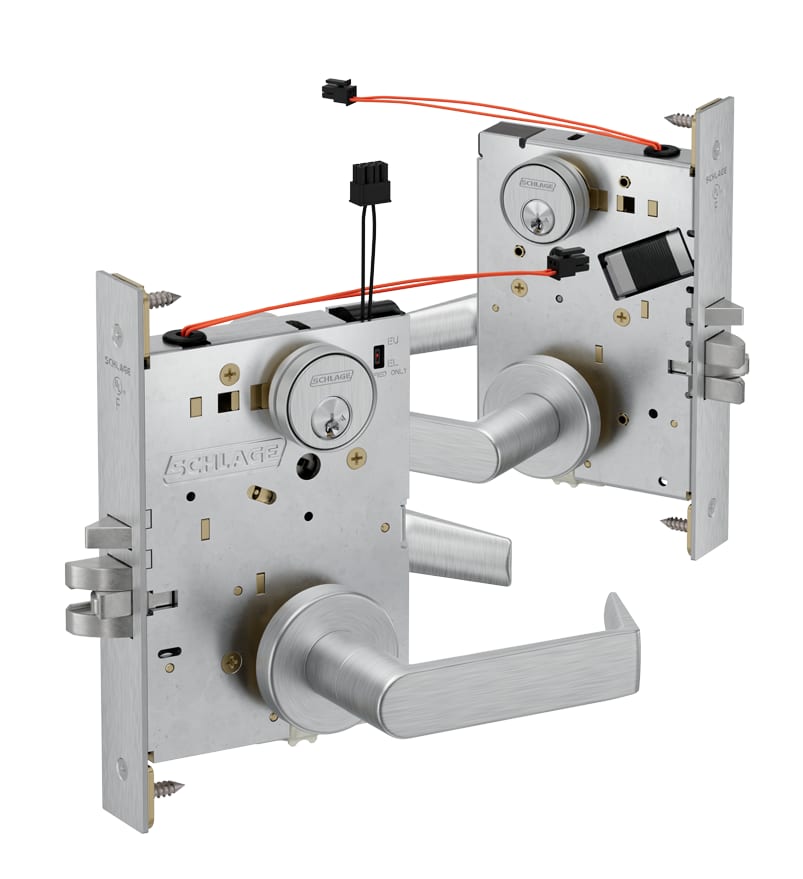
Schlage L Series Motorized Latch Retraction Lock
Latch retraction capable L Series Grade 1 locks from Schlage, a division of Allegion, create application opportunities across many markets, whether the need is security, controlled access, or hands-free operation. They can replace the need for electric strike use in a form that is more secure and aesthetically pleasing. Quiet operation makes them ideal for healthcare environments or anywhere repeat user exit and entry can become a nuisance. Image courtesy of Allegion
SHARE